
Vectors in Linear Algebra: A Simple Guide with Real-World Examples
What Exactly Are Vectors?
Imagine an arrow, it shows you both a direction it is going in and how far it will move in that direction. This arrow is what we call a vector!
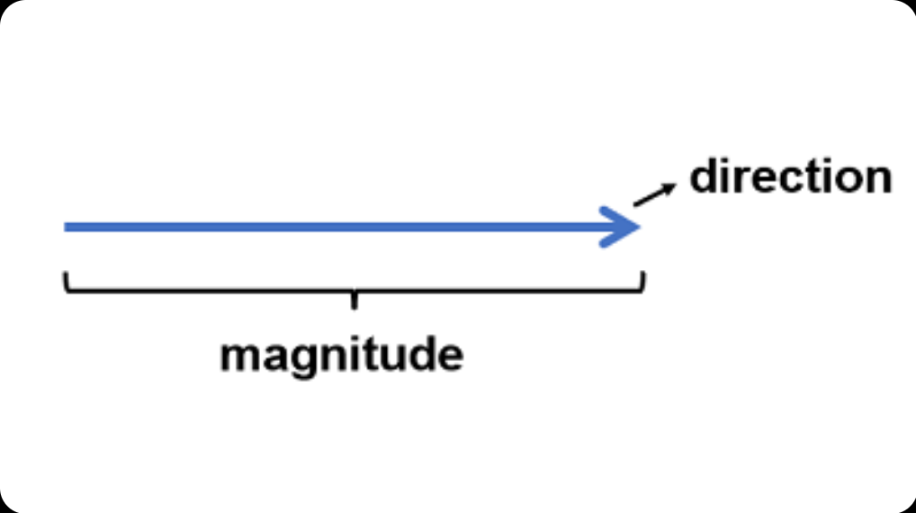
The vector essentially is comprised of:
- Length (also called magnitude or size)
- Direction (which way it’s pointing)
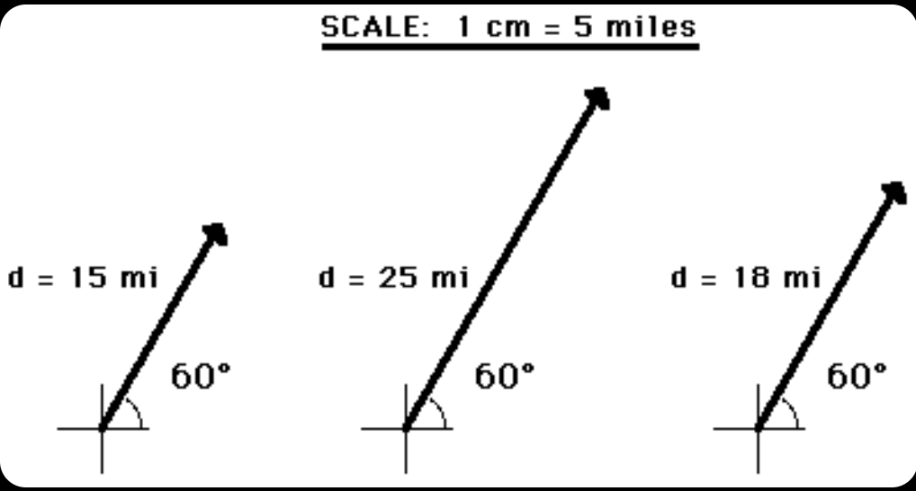
You’re thinking sure it looks like a bunch of mathematics, what does that have to do with me living my life? There are real-life situations that these vectors represent. One such example that most people recognize is Maps.
When your phone’s map tells you “go 3 miles northeast to reach the coffee shop,” that instruction is actually a vector! The distance (3 miles) is the magnitude, and northeast is the direction.
Mathematical Representation of Vectors
Have you heard about graphs with x and y axis? X basically represents any horizontal landscape and y represents the vertical direction of it.
In math, we usually represent a vector using numbers inside brackets [x, y], x for the horizontal magnitude and y for vertical. For example: [3, 4]
This means:
- Move 3 units horizontally (right on a graph)
- Then move 4 units vertically (up)
The length of this vector is calculated like this:
magnitude = √(3² + 4²) = √(9 + 16) = √25 = 5
Direction of this vector is the angle from the positive x-axis. Calculate using arctan:
θ = arctan(4/3) ≈ 53.13° (about 53 degrees counterclockwise from positive x-axis)
Very clean and useful!
How Does One Add Vectors? a.k.a. The Tip-to-Tail Method
When you want to combine two different movements, you add the vector representations of those movements.
The easiest way to picture it is the “tip-to-tail” method: place the tail of the second vector at the tip of the first one. The resulting vector goes from the very start to the very end.
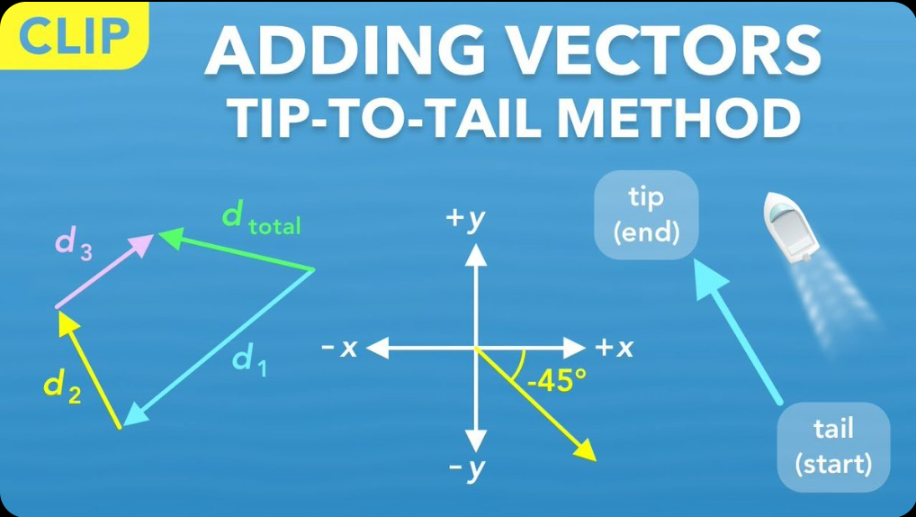
In the real world, think of yourself sailing a boat. Imagine wind blowing your boat strongly north (a big upward vector). At the same time, a water current pushes you eastward (a sideways vector). Your actual path across the water is calculated by the addition of these vectors — the main impact is the diagonal combination of both forces.
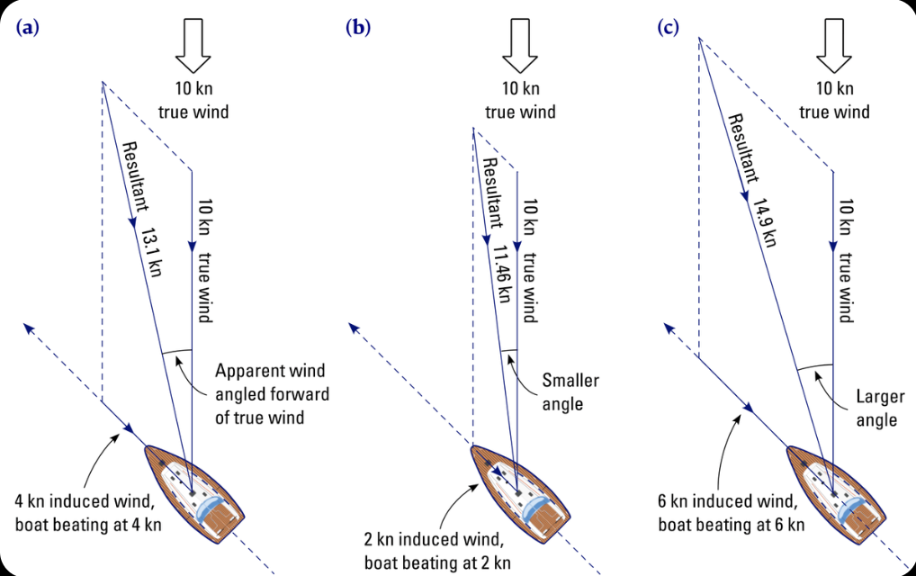
Airplane pilots and drone operators do exactly this calculation every day!
How Does One Multiply Vectors? a.k.a. Scaling
You can make a vector longer, shorter, or even flip it backward by multiplying it by a regular number (scalar).
- Multiply by 2 → twice as long, same direction
- Multiply by 0.5 → half the length
- Multiply by -1 → same length, opposite direction
This is pure mathematical and is not very obvious how this can impact real life. Though not intrinsically obvious, it has a very practical impact in real life. For example, if prices rise 10%, the easiest and quickest way of calculating the impact on budget is using this scaling. Just multiply your entire shopping budget vector by 1.1 and every item cost increases proportionally.
The Dot Product of Vectors a.k.a. Measuring “How Aligned” Two Vectors Are
Let’s explore what alignment even means in regards to vectors. Alignment of vectors is basically how much they point in the same direction. The alignment can be calculated by the angle between the two vectors.
- Perfect alignment: same direction
- No alignment: the angle between both is 90 degrees (perpendicular)
- Opposite alignment: the angle is 180 degrees (opposite directions)
The dot product is a special multiplication between two vectors. You calculate it by multiplying matching components and adding the results.
[3, 4] • [1, 2] = (3×1) + (4×2) = 3 + 8 = 11
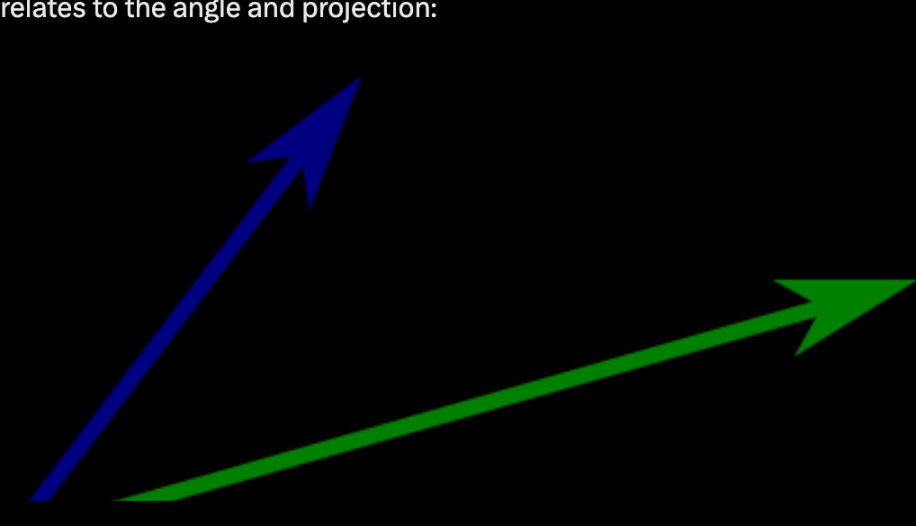
Geometrically, the dot product tells you how much one vector goes in the direction of the other. It’s heavily used behind the scenes in:
- Search engines (finding similar documents)
- Recommendation systems (Netflix, YouTube)
- Video games (lighting calculations)
- Machine learning
Why Should Anyone Care About Vectors?
Vectors are everywhere once you start looking:
- Video game characters moving around
- Forces acting on bridges and buildings
- GPS and navigation
- Data analysis and artificial intelligence
- Animation and 3D modeling
They’re simple arrows that quietly power our most modern technology.
Vectors are basically just arrows with length and direction that help us describe movement, forces, and similarities in the real world!